
Tablero kanban
Un tablero de sprint: cuatro columnas con contador, tarjetas con etiquetas de color, flechas de prioridad, fecha límite (hoy en rojo), comentarios, progreso del checklist y responsables, un filtro de texto, solo las mías, y botones para añadir tarjetas y mover la elegida entre columnas.
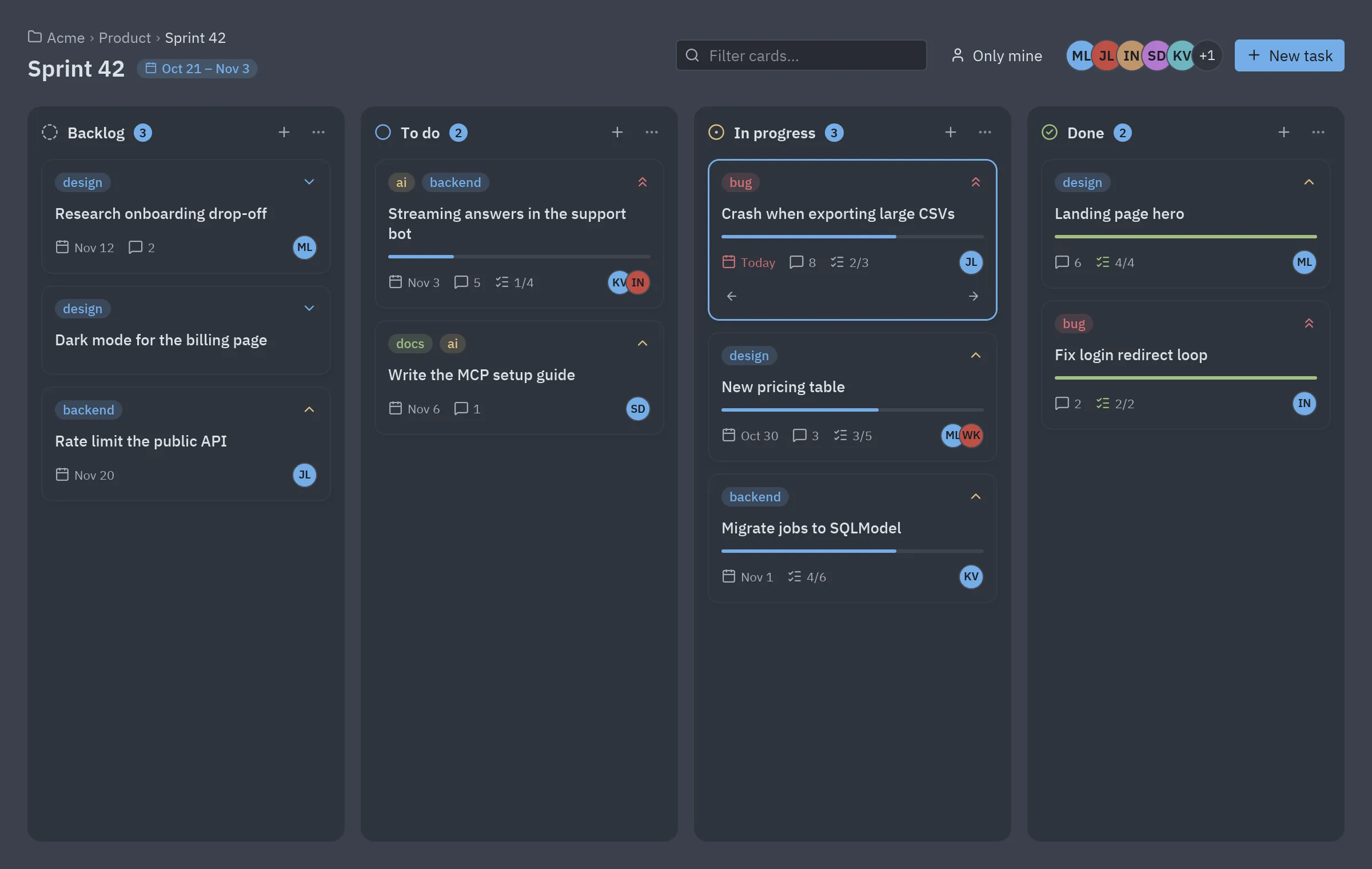
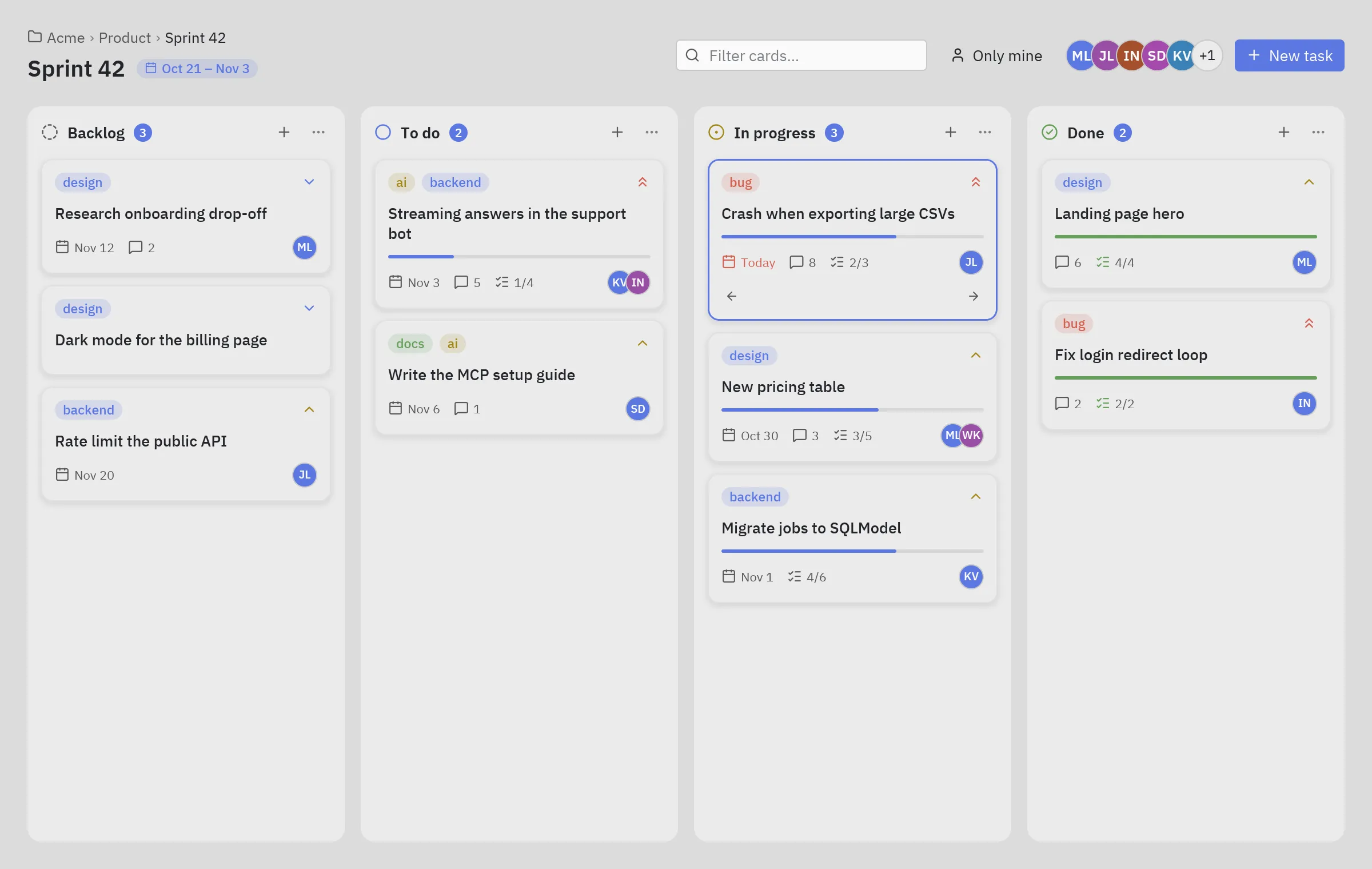
La captura sigue el tema del sitio: cambia entre claro y oscuro arriba de la página para ver el bloque en One Light y One Dark.
Ejecutarlo
Sección titulada «Ejecutarlo»Desde la raíz del repositorio:
python examples/blocks/kanban.pyQué muestra
Sección titulada «Qué muestra»- Las tarjetas son dataclasses; moverlas es cambiar su campo
column. - La tarjeta elegida tiene borde de acento y sus botones para moverla.
- Cada columna se desplaza sola dentro de un
pz.scrollable. - Una sombra suave en las tarjetas con
.style(shadow=...).
Componentes que usa
Sección titulada «Componentes que usa»| Componente | Para |
|---|---|
| Badge | Etiquetas |
| Count badge | Contadores |
| Progress | Checklists |
| Facepile | Responsables |
| Breadcrumbs | Ubicación |
| Search input | Filtro |
| Icon button | Añadir y mover |
| Scrollable | Columnas |
| Button | Solo las mías, nueva tarea |
El bloque completo, listo para copiar. Solo necesita pip install pyzed-ui.
"""Kanban block: a project board with columns, labelled cards, assignees, progress and moving cards along."""
from dataclasses import dataclass, fieldfrom typing import List
import pyzed as pzfrom pyzed import ui
COLUMNS = [("backlog", "Backlog", "circle-dashed", "text_muted"), ("todo", "To do", "circle", "info"),           ("doing", "In progress", "circle-dot", "warning"), ("done", "Done", "circle-check", "success")]TAGS = {"design": "accent", "backend": "info", "bug": "error", "docs": "success", "ai": "warning"}PRIORITY = {"high": ("chevrons-up", "error"), "medium": ("chevron-up", "warning"), "low": ("chevron-down", "info")}

@dataclassclass Card:    id: int    title: str    column: str    tags: List[str] = field(default_factory=list)    people: List[str] = field(default_factory=list)    priority: str = "medium"    due: str = ""    comments: int = 0    checklist: tuple = (0, 0)

CARDS = [    Card(1, "Research onboarding drop-off", "backlog", ["design"], ["ML"], "low", "Nov 12", 2),    Card(2, "Dark mode for the billing page", "backlog", ["design"], [], "low"),    Card(3, "Rate limit the public API", "backlog", ["backend"], ["JL"], "medium", "Nov 20"),    Card(4, "Streaming answers in the support bot", "todo", ["ai", "backend"], ["KV", "IN"], "high", "Nov 3", 5,         (1, 4)),    Card(5, "Write the MCP setup guide", "todo", ["docs", "ai"], ["SD"], "medium", "Nov 6", 1),    Card(6, "Crash when exporting large CSVs", "doing", ["bug"], ["JL"], "high", "Today", 8, (2, 3)),    Card(7, "New pricing table", "doing", ["design"], ["ML", "WK"], "medium", "Oct 30", 3, (3, 5)),    Card(8, "Migrate jobs to SQLModel", "doing", ["backend"], ["KV"], "medium", "Nov 1", 0, (4, 6)),    Card(9, "Landing page hero", "done", ["design"], ["ML"], "medium", "", 6, (4, 4)),    Card(10, "Fix login redirect loop", "done", ["bug"], ["IN"], "high", "", 2, (2, 2)),]

class Kanban(pz.App):    title = "Board"    size = (1200, 760)
    def __init__(self):        self.cards = [Card(**vars(c)) for c in CARDS]        self.query = ""        self.mine = False        self.selected = 6
    def move(self, card, step):        keys = [c[0] for c in COLUMNS]        card.column = keys[max(0, min(len(keys) - 1, keys.index(card.column) + step))]        self.selected = card.id
    def add(self, column):        new_id = max(c.id for c in self.cards) + 1        self.cards.append(Card(new_id, "Untitled task", column, [], ["KV"], "low"))        self.selected = new_id
    # -- view ------------------------------------------------------------------------------    def card(self, card):        t = self.resolved_theme()        icon, tint = PRIORITY[card.priority]        done, total = card.checklist        meta = []        if card.due:            meta.append(pz.row([pz.icon("calendar", size=13, color=t.error if card.due == "Today" else t.icon_muted),                                ui.label(card.due, size="xs", color="error" if card.due == "Today" else "text_muted")],                               spacing=4, align="center"))        if card.comments:            meta.append(pz.row([pz.icon("message-square", size=13, color=t.icon_muted),                                ui.muted(str(card.comments), size="xs")], spacing=4, align="center"))        if total:            meta.append(pz.row([pz.icon("list-checks", size=13, color=t.success if done == total else t.icon_muted),                                ui.muted(f"{done}/{total}", size="xs")], spacing=4, align="center"))        selected = card.id == self.selected        body = pz.column([            pz.row([*[ui.badge(tag, tint=TAGS[tag]) for tag in card.tags], pz.hspace(),                    pz.icon(icon, size=14, color=t.color(tint))], spacing=6, align="center"),            ui.label(card.title, weight="medium"),            ui.progress(done, max=total, height=3, tint="success" if done == total else "accent") if total else None,            pz.row([*meta, pz.hspace(),                    ui.facepile(card.people, size=22) if card.people else None], spacing=12, align="center"),            pz.row([ui.icon_button("arrow-left", lambda: self.move(card, -1), size="xs", tooltip="Move left"),                    pz.hspace(),                    ui.icon_button("arrow-right", lambda: self.move(card, 1), size="xs", tooltip="Move right")])            if selected else None,        ], spacing=10)        return pz.container(body, padding=12, width="fill").style(            background="elevated", radius=10, border=(1.5 if selected else 1, "accent" if selected else "border_variant"),            shadow=("#0000001f", (0, 2), 6),        ).on(click=lambda: setattr(self, "selected", card.id), cursor="pointer")
    def column(self, key, title, icon, tint):        q = self.query.lower()        cards = [c for c in self.cards if c.column == key and q in c.title.lower()                 and (not self.mine or "KV" in c.people)]        header = pz.row([            pz.icon(icon, size=15, color=self.resolved_theme().color(tint)),            ui.label(title, weight="semibold"),            ui.count_badge(len(cards), tint="accent" if key == "doing" else "info"),            pz.hspace(),            ui.icon_button("plus", lambda: self.add(key), size="sm", tooltip="Add a card"),            ui.icon_button("ellipsis", None, size="sm"),        ], spacing=8, align="center")        return pz.container(            pz.column([header, pz.scrollable(pz.column([self.card(c) for c in cards], spacing=10), height="fill")],                      spacing=12, height="fill"),            padding=12, width="fill", height="fill",        ).style(background="panel", radius=12)
    def view(self):        top = pz.row([            pz.column([                ui.breadcrumbs([("folder", "Acme"), "Product", "Sprint 42"]),                pz.row([ui.heading("Sprint 42", level=2), ui.badge("Oct 21 – Nov 3", tint="info", icon="calendar")],                       spacing=10, align="center"),            ], spacing=6),            pz.hspace(),            pz.container(ui.search_input(self.query, lambda v: setattr(self, "query", v), placeholder="Filter cards…"),                         width=220),            ui.button("Only mine", lambda: setattr(self, "mine", not self.mine), icon="user",                      selected=self.mine, variant="ghost"),            ui.facepile(["ML", "JL", "IN", "SD", "KV", "WK"], size=28, max_shown=5),            ui.button("New task", lambda: self.add("todo"), icon="plus", variant="solid"),        ], spacing=10, align="center")        board = pz.row([self.column(*c) for c in COLUMNS], spacing=14, height="fill")        return pz.column([top, board], spacing=20, padding=24, height="fill").style(background="background")

if __name__ == "__main__":    pz.run(Kanban)
Hazlo tuyo
Sección titulada «Hazlo tuyo»Cambia theme (o self.theme = pz.themes.get("One Dark").with_accent("#e11d48")), pon tus datos en lugar de los de ejemplo y separa piezas en componentes cuando crezcan. Un agente de IA con el servidor MCP puede leer este bloque con read_example("blocks/kanban") y adaptarlo por ti.